|
|
|---|
Unterbegriffe: Body-Mass-Index,
Cardiac mass,
Fettfreie Masse,
Fettmasse,
Fremdmassen,
Herzmasse,
Karotismassage,
Karotissinusmassage,
Knochenmasse,
Körperzellmasse,
Körperzellmasse-BCM,
Magermasse,
Massachusetts,
Massae-lateralis-Verschraubung,
Massagen,
Masse-Index,
Masseindex,
Massenblutung,
Massenspektrometrie,
Massenverschiebung
|
1. Valenta I;
Upadhyaya A;
Leucker T;
Schindler TH
Cardiac positron emission tomography in the identification and characterization of coronary artery disease and microvascular dysfunction // Kardiale PET zur Identifikation und Charakterisierung koronarer Herzkrankheiten und mikrovaskulärer Dysfunktion
PET
Journal für Kardiologie - Austrian Journal of Cardiology 2022; 29 (1-2): 34-40
13N-ammonia PET in the evaluation of CMD. Value of PET-determined hyperemic MBFs and MFR in the identification and characterization of CMD.
A 65-year-old woman with recurrent chest pain and shortness of breath during daily activities. Cardiovascular risk profile with obesity (body mass index
of 40 kg/m2
), dyslipidemia, and hypertension. (A): Regadenoson-stress and rest 13N-ammonia PET/CT images in corresponding short-axis (top), vertical
long-axis (middle), and horizontal long-axis (bottom) slices. On stress-images and rest perfusion images, there is homogenous radiotracer uptake of the
left ventricle. Thus, no reversible radiotracer uptake to suggest regional ischemia and normal rest perfusion. Hemodynamically obstructive CAD lesions
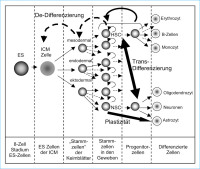
therefore can be widely ruled out. Gated peak-stress and rest PET images (not shown) demonstrated normal left ventricular size and wall motion associated
with a left ventricular ejection fraction of 50% and 52%, respectively. (B): Display of quantitative MBF data unravel globally reduced hyperemic MBFs with
only 1.29 mL/g/min (normal value > 1.80 mL/g/min) and decreased MFR with 1.71 (normal value > 2.0) to signify moderately severe CMD that may reflect
a functional substrate for reported anginal symptoms. Keywords: Kardiologie,
PET
|
|
|
2. Valenta I;
Upadhyaya A;
Leucker T;
Schindler TH
Cardiac positron emission tomography in the identification and characterization of coronary artery disease and microvascular dysfunction // Kardiale PET zur Identifikation und Charakterisierung koronarer Herzkrankheiten und mikrovaskulärer Dysfunktion
PET
Journal für Kardiologie - Austrian Journal of Cardiology 2022; 29 (1-2): 34-40
13N-ammonia PET in the evaluation of multivessel CAD. Value of hyperemic MBFs and MFR in an abnormal 13N-ammonia myocardial perfusion
PET/CT study. A 54-year-old man with increasing chest pain during daily activities. He had previous percutaneous coronary intervention (PCI) with stent
employment in the LAD. Cardiovascular risk profile with advanced obesity (body mass index of 41 kg/m2
), dyslipidemia, and hypertension. (A): Regadenoson-stress and rest 13N-ammonia PET/CT images in corresponding short-axis (top), vertical long-axis (middle), and horizontal long-axis (bottom) slices. On
stress-images, there is a large area of severely decrease in myocardial perfusion, involving the inferior and inferolateral walls extending to the antero-lateral, anterior, and apical wall segments but less in severity that becomes reversible on rest images. In addition, a transient ischemic dilation (TID) of 1.3 is noted on the stress-rest 13N-ammonia images indicative of diffuse ischemia-induced myocardial stunning. (B): Regional myocardial blood flow quantification
(MBF) and myocardial flow reserve (MFR) calculation. The summarized quantitative data signify an impairment of hyperemic MBF in the LAD distribution
(1.58 ml/g/min), but also and more pronounced in the LCx and RCA distribution (1.07 and 1.09 ml/g/min, respectively). Correspondingly, the MFR is abnormally reduced in all three major coronary territories, most pronounced in the LCs (1.29), followed by RCA (1.36), and LAD (1.61) distribution, respectively.
Invasive coronary angiography (not shown) in this patient unraveled indeed severe multivessel CAD accounting for the observed diffuse ischemia. The
proximal LAD had previous extensive stenting without significant stenosis, whilst the mid-portion of the LAD demonstrated a ≈ 90–95% in-stent restenosis.
The LCx demonstrated a 70% lesion in the posterolateral marginal brach, while in a dominant RCA, the posterior descending artery (PDA) was occluded. Keywords: Kardiologie,
PET
|
|
|
3. Battyanyi B;
Fazekas L
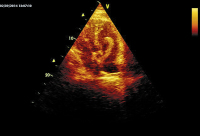
Echokardiographie aktuell: "Lebensrettender" atrialer Septaldefekt
Apikaler Vierkammerblick
Journal für Kardiologie - Austrian Journal of Cardiology 2016; 23 (3-4): 91-93
Apikaler Vierkammerblick: Lange echoreiche, anscheinlich am Vorhofseptum fixierte Masse prolabiert in die rechte und (weniger sichtbar) in die linke Kammer. Keywords: Apikaler Vierkammerblick
|
|
|
4. Battyanyi B;
Fazekas L
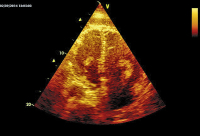
Echokardiographie aktuell: "Lebensrettender" atrialer Septaldefekt
Echo
Journal für Kardiologie - Austrian Journal of Cardiology 2016; 23 (3-4): 91-93
Echoreiche Massen in der linken und der (mäßig dilatierten) rechten Kammer. Keywords: Echo
|
|
|
5. Grillitsch M;
Häusler M;
Koidl C;
Karpf E;
Kurath-Koller S;
Resch B
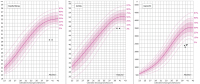
Schwere kongenitale Zytomegalieinfektion durch frühe Virusreaktivierung in der Schwangerschaft
Neonatale Perzentile
Speculum - Zeitschrift für Gynäkologie und Geburtshilfe 2015; 33 (4) (Ausgabe für Österreich): 20-23
Neonatale Perzentile mit sämtlichen Maßen unter der 3. Perzentile. Keywords: CMV,
Maß,
Neugeborenes,
Speculum,
Virus,
Zytomegalie
|
|
|
6. Grillitsch M;
Häusler M;
Koidl C;
Karpf E;
Kurath-Koller S;
Resch B
Schwere kongenitale Zytomegalieinfektion durch frühe Virusreaktivierung in der Schwangerschaft
Fetale Maße
Speculum - Zeitschrift für Gynäkologie und Geburtshilfe 2015; 33 (4) (Ausgabe für Österreich): 20-23
Fetale Maße in SSW 25+4 mit Werten (blau) unter der 5. Perzentile mit Ausnahme der Cisterna magna (> 95. Perzentile). Keywords: CMV,
Fetus,
Maß,
Speculum,
Virus,
Wachstum,
Zytomegalie
|
|
|
7. Gangl C;
Delle Karth G
OCT-Corner: Rezidivierende Stentthrombose
Thrombus - Stent
Journal für Kardiologie - Austrian Journal of Cardiology 2015; 22 (1-2): 34-37
(a): Thrombus; (b): Gut eingewachsener TAXUS-Stent direkt proximal der intraluminalen Masse; (c): Longitudinalschnitt mit Lokalisierungsmarker der Bilder a bzw.b Keywords: Kardiologie,
OCT-Bild,
Stent,
Thrombus
|
|
|
8. Mitsuya K;
Nakasu Y
Metastatic Skull Tumours: Diagnosis and Management
Calvarial metastasis
European Association of NeuroOncology Magazine 2014; 4 (2): 71-74
A 70-year-old woman with calvarial metastasis from lung cancer presenting with cosmetic problem in the forehead. (a) Pre-enhanced axial and (b) post-enhanced sagittal MR images demonstrating a mass lesion with focal invasion into the skin and dura mater. (c) Skull X-rays showing an osteolytic lesion (white arrow), and (d) surgical results of resection with a wide margin and reconstruction in the frontal bone (arrow heads). Keywords: calvarial metastasis,
MRI,
x-ray
|
|
|
9. Baehring JM
Lymphoma Nerve Infiltration
Mantle cell lymphoma
European Association of NeuroOncology Magazine 2014; 4 (2): 61-64
A 54-year-old man with a history of mantle cell lymphoma presented with tingling along the palmar surface of his left thumb. Then the left thumb, first and second digit started feeling “inflamed, swollen, about to explode�. The pain awakened him at night. At the same time, he felt a burning pain along the heel, lateral and anterior plantar surface of the right foot. Work-up revealed neurolymphomatosis. Multiple mass lesions were identified within the
peripheral nervous system including the left sciatic nerve ([a, b] 18-FDG-PET), the left median nerve (arrow head in [c]; axial T1-weighted MRI of the left forearm; note infiltration of the flexor musculature by tumour), right brachial plexus, right sciatic nerve, and left tibial nerve (not shown). Biopsy of the soft tissue mass in the right forearm
revealed a mantle cell lymphoma.
R: radius; U: ulna Keywords: mantle cell lymphoma,
MRI,
peripheral nervous system,
PET
|
|
|
10. Uckermann O;
Galli R;
Mackenroth L;
Geiger K;
Steiner G;
Koch E;
Schackert G;
Kirsch M
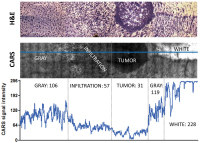
Optical Biochemical Imaging: Potential New Applications in Neuro-Oncology
CARS image
European Association of NeuroOncology Magazine 2014; 4 (1): 20-26
CARS microscopy of infiltrative experimental
glioblastoma in a mouse model: The intensity of the CARS image and the morphological details permit to distinguish between the tumour mass, the infiltrative area, and the normal brain grey and white matters. H&E staining (top) CARS image (centre). The intensity of the CARS signal along the blue line is plotted in the graph (bottom). Mean intensity values for the different types of tissue are also reported. Mean intensity that characterizes the normal grey tissue is reduced to approximately 50 % in the infiltrative area and to approximately 30 % in the tumour. Lipid rich white matter is characterized by high CARS signal intensity (228, saturation in some areas). Keywords: CARS image,
scheme
|
|
|
11. Prückler J;
Leitner G;
Klein M;
Gruber I
Ernährungstherapie und Essverhalten bei Polyzystischem Ovarialsyndrom (PCOS) im Rahmen einer Kinderwunschbehandlung
Essverhalten-PCOS
Journal für Gynäkologische Endokrinologie 2013; 7 (3) (Ausgabe für Österreich): 14-17
Journal für Gynäkologische Endokrinologie 2013; 7 (3) (Ausgabe für Schweiz): 11-14
Body- Mass-Index (Median) von Frauen mit PCOS (n = 11) im Verlauf. Keywords: BMI,
Body-mass-Index,
Diagramm,
Gewichtsverlauf,
Gynäkologie,
PCOS
|
|
|
12. Hamerlik P;
Rich JN;
Lathia JD
News and Views Basic Science: Glioblastoma Stem Cells
GSC
European Association of NeuroOncology Magazine 2013; 3 (2): 49-55
Glioblastoma stem cells (GSC) reside in vascular and hypoxic niches. Schematic
representation of GSC residing in a vascular niche supported by blood vessels
and hypoxic niche adjacent to necrotic regions. Each niche promotes the maintenance
of the GSC population and supports the expansion of the tumour mass. Keywords: glioblastoma stem cells,
scheme
|
|
|
13. Smits M
Functional Magnetic Resonance Imaging (fMRI) in Brain Tumour Patients
Brain tumour
European Association of NeuroOncology Magazine 2012; 2 (3): 123-128
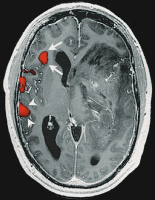
Large high-grade tumour in the left temporal lobe of a right-handed
patient. fMRI activation of a verb generation task is present in the expressive-language
area in the inferior frontal gyrus (arrows), as well as in the receptive-language areas in
the posterior temporo-parietal cortex (arrowheads) in the right hemisphere. No
activation is seen in the left hemisphere. Upon surgery, a left-lateralised hemispheric
language representation was found with ECM, as would be expected in a right-handed
patient. The atypical lateralisation towards the right hemisphere found with fMRI is
most likely due to a tumour ( mass) effect decreasing the BOLD signal in the affected left
hemisphere. Keywords: brain,
fMRI,
Tumor
|
|
|
14. Velasco R;
Bruna J
Neurologic Complications in Multiple Myeloma and Plasmacytoma
Brain - MRI
European Association of NeuroOncology Magazine 2012; 2 (2): 71-77
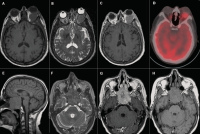
MRI of the brain shows cranial plasmacytoma in a 61-year-old woman with MM IgA kappa who presented with left exophthalmos. (A) Axial T1-weighted
image shows an isointense mass in the left orbit. (B) Axial T2-weighted image shows the mass hypointense. (C) Axial T1-weighted gadolinium-enhanced image shows mild
enhancement of the mass. (D) Fused CT and FDG-PET images. (E, F, G, H) MRI of the brain shows a plasmacytoma of the clivus in a 57-year-old woman presenting with
diplopia and left-abducens palsy. The sagittal (E) and axial (H) T1-weighted images show an isointense mass arising from the clivus. (F) The axial T2-weighted image shows
a hypointense mass. (G) The axial T1-weighted gadolinium-enhanced image shows mild enhancement of the plasmacytoma. Keywords: brain,
MRI
|
|
|
15. Rösing B;
Bauer J
Epilepsie und polyzystisches Ovarialsyndrom
Epilepsie - AED - endokrine Organe
Journal für Reproduktionsmedizin und Endokrinologie - Journal of Reproductive Medicine and Endocrinology 2012; 9 (2): 128-141
Schematische Darstellung zur Interaktion von Epilepsie, antiepileptischer Medikation (AED) und
endokrinen Organen. Potenzielle Störungen der ovariellen Funktion bei Frauen mit Epilepsie können aus dem epileptogenen
Fokus (morbogen) und der spezifischen Medikation resultieren. Epileptogene Foci weisen nicht nur im
Anfall, sondern auch interiktal eine gestörte regionale ZNS-Aktivität auf. Besonders die neuronalen Impulse aus
temporal gelegenen, epileptogenen Foci propagieren zu hypothalamischen und hypohysären Strukturen mit einer
konsekutiven Dysbalance der regulären Gonadoliberin- und Gonadotropinausschüttung. Die Einflüsse auf die ovariellen
Morphologie und Funktion, insbesondere die ovarielle Androgenproduktion, resultieren sowohl aus der
Gonadotropindysbalance (morbogene Genese), als auch aus den direkten (z. B. auf die Thekazell-Funktion, SHBGSynthese
und Androgenbindung) oder indirekten (Body- mass-Index [BMI], Insulinstoffwechsel) Effekten der spezifischen
Behandlung mit antiepileptischen Medikamenten (AED). Das Ausmaß störender Einflüsse (morbogen und
medikamentös) auf endokrine Funktionen ist nicht immer klar einzuschätzen. Die Störeffekte können sich gegenseitig
verstärken.
AED: anti-epileptic-drug(s); BMI: Body-mass-Index; GnRH: Gonadotropin-releasing-hormone; IGF: insuline-likegrowth-
factor; PCO: polyzystisches Ovar; SHBG: sexualhormonbindendes Globulin Keywords: AED,
endokrines Organ,
Endokrinologie,
Epilepsie,
Schema
|
|
|
16. Staudinger T
Die respiratorische Katastrophe des adipösen Patienten
BMI - Österreich
Journal für Klinische Endokrinologie und Stoffwechsel - Austrian Journal of Clinical Endocrinology and Metabolism 2012; 5 (2): 30-34
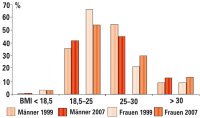
Body- Mass-Index (BMI) österreichischer Männer und Frauen im Vergleich
1999 und 2007. Erstellt nach Daten aus [2]. Keywords: BMI,
Frau,
Mann,
Österreich
|
|
|
17. Weihs W
Echokardiographie aktuell: Basis- und erweiterte Evaluierung der systolischen Linksventrikelfunktion nach Myokardinfarkt
Linksventrikuläre Volumina - EF
Journal für Kardiologie - Austrian Journal of Cardiology 2011; 18 (3-4): 102-104
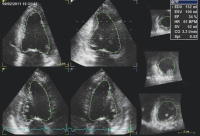
Automatisierte Messung der linksventrikulären Volumina und EF in einer
dreidimensionalen Aufzeichnung des linken Ventrikels. Weitere mögliche Parameter
sind der "sphericity index", die linksventrikuläre Masse sowie Strain-Analysen. Keywords: EF,
Kardiologie,
Linksventrikuläre Volumina,
sphericity index
|
|
|
18. Ebner T;
Vanderzwalmen P;
Shebl O;
Mayer RB;
Moser M;
Tews G
Morphological Aspects of Human Blastocysts and the Impact of Vitrification
Inner cell mass
Journal für Reproduktionsmedizin und Endokrinologie - Journal of Reproductive Medicine and Endocrinology 2011; 8 (1): 13-20
Inner cell mass of optimal size and shape.
Reduction in developmental potential is due to the presence of vacuole (V) and necrotic focus (N). Keywords: Biologie,
Embryologie,
inner cell mass,
innere Zellmasse,
Reproduktionsmedizin
|
|
|
19. Ebner T;
Vanderzwalmen P;
Shebl O;
Mayer RB;
Moser M;
Tews G
Morphological Aspects of Human Blastocysts and the Impact of Vitrification
Trophoblast vesicle
Journal für Reproduktionsmedizin und Endokrinologie - Journal of Reproductive Medicine and Endocrinology 2011; 8 (1): 13-20
Trophoblast vesicle without inner cell mass
consisting of only a minor number of trophectodermal
cells. Keywords: Biologie,
Embryologie,
Reproduktionsmedizin,
Throphoblast,
trophoblast vesicle
|
|
|
20. Ebner T;
Vanderzwalmen P;
Shebl O;
Mayer RB;
Moser M;
Tews G
Morphological Aspects of Human Blastocysts and the Impact of Vitrification
Blastocyst
Journal für Reproduktionsmedizin und Endokrinologie - Journal of Reproductive Medicine and Endocrinology 2011; 8 (1): 13-20
Full blastocyst (IIIbb) showing cell lineages
with a limited number of cells. Arrow indicates presence of a necrotic focus in the inner cell mass. Keywords: Biologie,
blastocyst,
Blastozyste,
Embryologie,
Reproduktionsmedizin
|
|
|
21. Ebner T;
Vanderzwalmen P;
Shebl O;
Mayer RB;
Moser M;
Tews G
Morphological Aspects of Human Blastocysts and the Impact of Vitrification
Blastocyst
Journal für Reproduktionsmedizin und Endokrinologie - Journal of Reproductive Medicine and Endocrinology 2011; 8 (1): 13-20
Blastocyst (IVcb) with no visible inner cell
mass (comparable to trophoblast vesicle). Trophectoderm
quality is reduced since the left hemisphere consists
only of a few large cells. Keywords: Biologie,
blastocyst,
Blastozyste,
Embryologie,
Reproduktionsmedizin
|
|
|
22. Ebner T;
Vanderzwalmen P;
Shebl O;
Mayer RB;
Moser M;
Tews G
Morphological Aspects of Human Blastocysts and the Impact of Vitrification
Blastocyst - Hatching
Journal für Reproduktionsmedizin und Endokrinologie - Journal of Reproductive Medicine and Endocrinology 2011; 8 (1): 13-20
Hatching blastocyst of optimal quality (Vaa)
with the hatching site being at the 4 o’clock position. BC: blastocyst cavity; ICM: inner cell mass; TE: trophectoderm Keywords: Biologie,
blastocyst,
Embryologie,
Hatching,
Reproduktionsmedizin
|
|
|
23. Weihs W
Echokardiographie aktuell: Kardiale Beteiligung bei Systemerkrankungen - Karzinoid
Tissue Doppler
Journal für Kardiologie - Austrian Journal of Cardiology 2010; 17 (5-6): 234-237
Die systolische Längsverkürzung des rechten Ventrikels als Maß der
Pumpfunktion lässt sich im „Tissue Doppler“ (lateraler Trikuspidalring) darstellen Keywords: Echo,
Kardiologie
|
|
|
24. Schramm C;
Dinter J;
Demir M;
Lengerli K;
Töx U;
Steffen H-M
Hypertonie-Prävalenz und antihypertensive Behandlungsmodalitäten bei Patienten mit bioptisch gesicherter nicht-alkoholischer Fettlebererkrankung
NASH - NAFL
Journal für Hypertonie - Austrian Journal of Hypertension 2010; 14 (4): 21-25
Verteilung des Body- Mass-Index bei NASH- und NAFL-Patienten. Keywords: Diagramm,
Hypertonie,
NAFL,
NASH
|
|
|
|
|
|
26. Markovic O;
Cernak M;
Bilek J;
Nepp J
Sicca-Syndrom: Anamnese und Grundlagen der Therapie
Schirmertest
Journal für Mineralstoffwechsel & Muskuloskelettale Erkrankungen 2009; 16 (2): 67-71
Schirmertest als Maß für die Reizproduktion von Tränenflüssigkeit, pathologisch sind Werte unter 5 mm. Keywords: Auge,
Foto,
Mineralstoffwechsel,
Tränenfilm
|
|
|
27. Markovic O;
Cernak M;
Bilek J;
Nepp J
Sicca-Syndrom: Anamnese und Grundlagen der Therapie
Tränenfilmaufrisszeit
Journal für Mineralstoffwechsel & Muskuloskelettale Erkrankungen 2009; 16 (2): 67-71
Break up-time (Tränenfilmaufrisszeit) ist ein Maß für die Tränenfilmstabilität, am Foto sieht man das Aufreißen der Tränenfilms als schwarzen, sich vergrößernden Fleck Keywords: Auge,
Foto,
Mineralstoffwechsel,
Tränenfilm
|
|
|
|
|
|
|
|
|
30. Mettler L;
Patvekar M;
Soyinka AS;
Meinhold I;
Schollmeyer T;
Schmutzler A
Value of Malignancy Exclusion of Ovarian Cysts Prior to Laparoscopy
Laparoskopie
Journal für Reproduktionsmedizin und Endokrinologie - Journal of Reproductive Medicine and Endocrinology 2008; 5 (2): 93-100
Parity distribution of patients with adnexal masses undergoing ovarian conservative surgeries at laparoscopy (n = 330). Keywords: Diagramm,
flowchart,
Laparoscopy,
Laparoskopie
|
|
|
31. Mettler L;
Patvekar M;
Soyinka AS;
Meinhold I;
Schollmeyer T;
Schmutzler A
Value of Malignancy Exclusion of Ovarian Cysts Prior to Laparoscopy
Laparoskopie
Journal für Reproduktionsmedizin und Endokrinologie - Journal of Reproductive Medicine and Endocrinology 2008; 5 (2): 93-100
Distribution of patient’s symptomatology and indications for laparoscopic treatment.
(USS: routine ultrasound screening; menst.r: menstrual disorders; LAP: lower abdominal pain;
LAM: lower abdominal mass and fertility disorders; n = 455) Keywords: Diagramm,
flowchart,
Laparoscopy,
Laparoskopie,
Symptomatik,
symptomatology
|
|
|
|
|
|
33. Binder T
Evaluierung zur kardialen Resynchronisationstherapie (CRT) - Die echokardiographische Untersuchung
Mitralinsuffizienzsignal dP/dt
Journal für Kardiologie - Austrian Journal of Cardiology 2007; 14 (3-4): 63-70
Mitralinsuffizienzsignal (CW-Doppler). Die dP/dt ist ein Maß für die Kontraktilität des linken Ventrikels. Eine gute Kontraktilität ist durch einen raschen Abfall der Kurve gekennzeichnet. Die Steilheit der Kurve wird hierbei zwischen 1 m/sec und 3 m/sec bestimmt. Diese entspricht jener Zeitdauer, welche benötigt wird, bis der Druckgradient zwischen linkem Ventrikel und dem linken Vorhof von 4 mmHg auf 36 mmHg ansteigt. Die dP/dt errechnet sich aus dem Zeitintervall dividiert durch 32000. Im vorliegenden Fall beträgt der Zeitintervall 67 msec. Die dP/dt ist somit mit 478 mmHg/sec deutlich erniedrigt (normal 1000 bis 2000 mmHg/sec). Keywords: Echokardiogramm,
Kardiologie,
Mitralinsuffizienz
|
|
|
34. Eber B;
Weber T;
Artmann A;
Enayati S
Fixkombination Enalapril/Nitrendipin in der täglichen Praxis - Effektivität und Verträglichkeit bei 1.262 österreichischen Hypertonikern
Body-Mass-Index
Journal für Hypertonie - Austrian Journal of Hypertension 2007; 11 (2): 22-25
Body- Mass-Index (Angaben in Prozent, BMI in kg/m2) Keywords: Body-mass-Index,
Hypertonie
|
|
|
35. Polterauer P;
Gollackner B;
Nanobachvili J;
Domenig C;
Huk I;
Kretschmer G
Indikation, Technik und Ergebnisse der Behandlung von Karotisstenose-Patienten
Zylinder
Zeitschrift für Gefäßmedizin 2007; 4 (2): 4-9
Zylinder mit atherosklerotisch veränderter Intima, exulzerierte Plaques und thrombotische Massen. Keywords: Gefäßmedizin,
Operationssitus
|
|
|
36. Prim. Univ.-Prof. Dr. med. P. Ritschl (Wien)
Möglichkeiten bei Extremsituationen: die Endoprothese nach Maß
15. Österreichisches Osteoporoseforum; St. Wolfgang - Salzkammergut; 3.5.2007 - 5.5.2007
Session Nr. 4 - 4.5.2007
Keywords: 15. Österreichisches Osteoporoseforum,
3.-5. Mai 2007,
Endoprothese,
Mineralstoffwechsel,
Osteoporose
|
|
|
37. Koestenbauer S;
Zech N;
Dohr G
Trans-Differenzierung von adulten Stammzellen - Ist eine Veränderung in Richtung naiverer Zellen möglich?
Stammzellbaum
Journal für Reproduktionsmedizin und Endokrinologie - Journal of Reproductive Medicine and Endocrinology 2006; 3 (5): 324-330
Stammzellbaum: Plastizität, Trans-Differenzierung und De-Differenzierung. Aus den embryonalen Stammzellen (ESs) des 8-Zellstadiums entwickelt sich die Blastozyste. Aus den Keimscheiben- (Embryoblast = inner cell mass = ICM-) Zellen entstehen die drei Keimblätter mit ihren Stammzellen, die wiederum zu den Gewebsstammzellen (z. B. hämatopoetische Stammzellen [HSCs], neuronale Stammzellen [NSC]) werden. Die Gewebsstammzellen erhalten ihren Pool durch Autoreproduktion und entwickeln sich über Progenitorzellen zu den differenzierten
Zellen. Trans-Differenzierung: z. B. aus HSC/Progenitoren entstehen neurale Zellen und vice versa. Plastizität: aus NSCs entstehen neuronale Zellen. De-Differenzierung: aus Progenitoren werden wieder Gewebsstammzellen, aus diesen wiederum Stammzellen des Keimblattes, … Keywords: Biologie,
Embryologie,
Schema,
Stammzellbaum,
Stammzelle
|
|
|
38. Wallner S;
Wascher TC
Qualität von Adipositasprogrammen
Körpergewicht - Körperzusammensetzung
Journal für Ernährungsmedizin 2006; 8 (3): 11-16
Veränderung von a) Body- mass-Index (BMI), b) Körpergewicht (in kg), c) Fettmasse (in %) und d) Körperzellmasse-BCM (in %) - Mittelwert und Standardabweichung - im Zeitraum von sechs und zwölf Monaten. ***p < 0,001, **p < 0,01 im paarweisen Vergleich (0-1; 1-2; 2-3; 3-4; 4-5; 5-6; 6-12). Keywords: BMI,
Diagramm,
Ernährungsmedizin,
Fettmasse,
Körgergewicht,
Körperzellmasse
|
|
|
39. Bonner G
Der Effekt von körperlicher Aktivität auf die arterielle Hypertonie und andere Herz-Kreislauf-Risikofaktoren
Ausdauertraining - Diabetes mellitus
Journal für Hypertonie - Austrian Journal of Hypertension 2006; 10 (3): 30-34
Inzidenz eines Typ 2-Diabetes mellitus bei Studenten über 14 Jahre in Abhängigkeit von der initialen körperlichen Aktivität und dem
Körpergewicht. Die Aktivität wurden in kcal/Woche ermittelt, das Körpergewicht als body mass index berechnet. Adipöse, inaktive Studenten
hatten das 4-fache Diabetesrisiko im Vergleich zu normgewichtigen aktiven Studenten (mod. nach [14]). Keywords: Ausdauertraining,
Diabetes mellitus Typ 2,
Diagramm,
Hypertonie
|
|
|
40. Stanek B
Kardioprotektion durch selektive Aldosteronblockade
Eplerenon - Linkventrikuläre Masse
Journal für Kardiologie - Austrian Journal of Cardiology 2005; 12 (7-8): 215-220
Abnahme der linksventrikulären Masse unter Eplerenon (EPL) und/oder Enalapril (ENAL). Mod. nach [74]. Keywords: Diagramm,
Enalapril,
Eplerenon,
Kardiologie,
linksventrikuläre Masse
|
|
|
| |

 Suche Medizinische Publikationen
 Suche Abbildungen und Grafiken
 Medizinprodukte - Labortechnik
 Antidotarium (Stand 2012)
 Phytokodex (Stand 2012)
 Fachbücher
 Patientenliteratur