
 Suche Medizinische Publikationen
 Suche Abbildungen und Grafiken
 Medizinprodukte - Labortechnik
 Antidotarium (Stand 2012)
 Phytokodex (Stand 2012)
 Fachbücher
 Patientenliteratur
Dia-Präsentation von Solvay Pharma aus dem Jahr 2003 Eprosartan (65 Abbildungen) Übersicht Gesamtpräsentation zum Download (rechte Maustaste und "Ziel speichern unter..." klicken)
| ||||||||||||||||||
Abbildung 4: AT1-Blocker – kompetitiver und nicht-kompetitiver Antagonismus Während Eprosartan kompetitiv den AT1-Rezeptor blockiert, hemmen Irbesartan, Valsartan sowie der aktive Metabolit von Losartan nicht-kompetitiv die Wirkung von Angiotensin II am Rezeptor. Eprosartan konkurriert mit Angiotensin II um die Bindung an den AT1-Rezeptor. Daher kann durch unphysiologisch hohe Konzentrationen von Angiotensin II im Modell der präparierten Kaninchenaorta eine Vasokonstriktion erreicht werden. Die nicht-kompetitiv wirkenden AT1-Blocker binden hingegen irreversibel an den AT1-Rezeptor. Daher können auch hohe Konzentrationen von Angiotensin II die Kontraktilität der Aorta nicht vollständig wiederherstellen. Cazaubon C, Gougat J, Bousquet F, et al. Pharmacological characterisation of SR 47436, a new nonpeptide AT1 subtype angiotensin II receptor antagonist. J Pharmacol Exp Ther 1993; 265: 826–34 Criscione L, deGasparo M, Buhlmayer P: Pharmacological profile of valsartan: a potent, orally active nonpeptide antagonist of the angiotensin II AT1 receptor subtype. Br J Pharmacol 1993; 110: 761–771 Wong PC, Price WA Jr, Chiu AT, et al.: Nonpeptide angiotensin II receptor antagonists. XI Pharmacology of EXP3174: an active metabolite of DuP 753, an orally active antihypertensive agent. J Pharm Exp Therapeutics 1990; 255: 211-217 McIntyre M, Caffe SE, Michalak RA et al.: Losartan, an orally active angiotensin (AT1) receptor antagonist: a review of its efficacy and safety in essential hypertension. Pharmacol Ther 1997; 74(2): 181–194 |


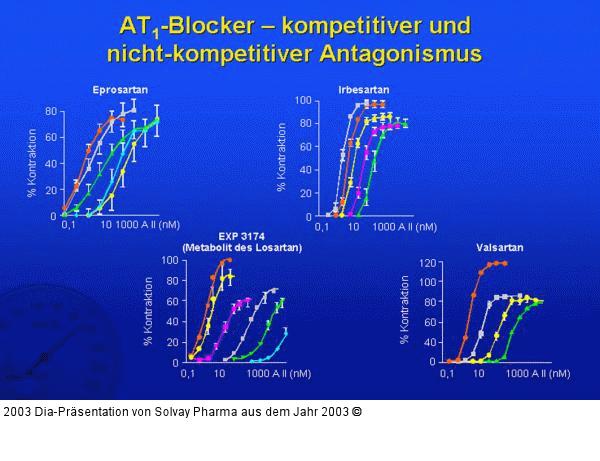
Abbildung 4: AT1-Blocker – kompetitiver und nicht-kompetitiver Antagonismus
Während Eprosartan kompetitiv den AT1-Rezeptor blockiert, hemmen Irbesartan, Valsartan sowie der aktive Metabolit von Losartan nicht-kompetitiv die Wirkung von Angiotensin II am Rezeptor. Eprosartan konkurriert mit Angiotensin II um die Bindung an den AT1-Rezeptor. Daher kann durch unphysiologisch hohe Konzentrationen von Angiotensin II im Modell der präparierten Kaninchenaorta eine Vasokonstriktion erreicht werden. Die nicht-kompetitiv wirkenden AT1-Blocker binden hingegen irreversibel an den AT1-Rezeptor. Daher können auch hohe Konzentrationen von Angiotensin II die Kontraktilität der Aorta nicht vollständig wiederherstellen. Cazaubon C, Gougat J, Bousquet F, et al. Pharmacological characterisation of SR 47436, a new nonpeptide AT1 subtype angiotensin II receptor antagonist. J Pharmacol Exp Ther 1993; 265: 826–34 Criscione L, deGasparo M, Buhlmayer P: Pharmacological profile of valsartan: a potent, orally active nonpeptide antagonist of the angiotensin II AT1 receptor subtype. Br J Pharmacol 1993; 110: 761–771 Wong PC, Price WA Jr, Chiu AT, et al.: Nonpeptide angiotensin II receptor antagonists. XI Pharmacology of EXP3174: an active metabolite of DuP 753, an orally active antihypertensive agent. J Pharm Exp Therapeutics 1990; 255: 211-217 McIntyre M, Caffe SE, Michalak RA et al.: Losartan, an orally active angiotensin (AT1) receptor antagonist: a review of its efficacy and safety in essential hypertension. Pharmacol Ther 1997; 74(2): 181–194 |