
 Suche Medizinische Publikationen
 Suche Abbildungen und Grafiken
 Medizinprodukte - Labortechnik
 Antidotarium (Stand 2012)
 Phytokodex (Stand 2012)
 Fachbücher
 Patientenliteratur
Schweppe KW, Rabe T, Langhardt M, Woziwodzki J, Petraglia F, Kiesel L Endometriosis – Pathogenesis, Diagnosis, and Therapeutic Options for Clinical and Ambulatory Care Journal für Reproduktionsmedizin und Endokrinologie - Journal of Reproductive Medicine and Endocrinology 2013; 10 (Sonderheft 1): 102-119 Volltext (PDF) Summary Übersicht
| ||||||||||||||||||
Abbildung 8: Estrogen metabolism in endometrial lesions Estrogen metabolism in endometrial lesions: Defective 17-beta-steroid-dehydrogenase type 2. This means that the bioactive estradiol cannot be converted into the less active estron. In the normal endometrium, progesterone activates this 17-beta-HSD Type 2 and has an antiproliferative effect; this mechanism is disrupted in endometrial lesions (so-called progesterone block). |


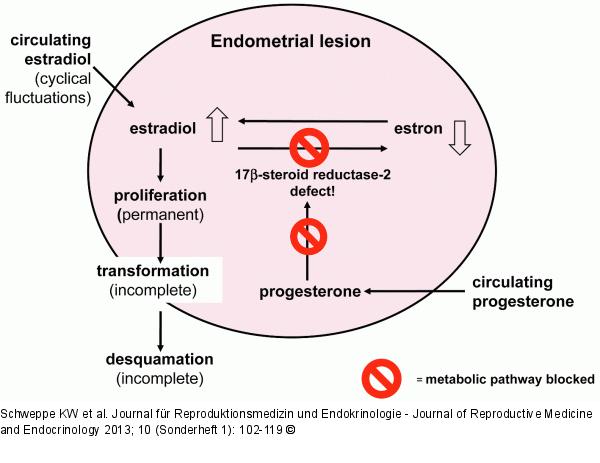
Abbildung 8: Estrogen metabolism in endometrial lesions
Estrogen metabolism in endometrial lesions: Defective 17-beta-steroid-dehydrogenase type 2. This means that the bioactive estradiol cannot be converted into the less active estron. In the normal endometrium, progesterone activates this 17-beta-HSD Type 2 and has an antiproliferative effect; this mechanism is disrupted in endometrial lesions (so-called progesterone block). |