|
|
|---|
2961. Koch RO;
Tilg H
Therapie bei chronisch entzündlichen Darmerkrankungen: Immunsuppressiva, Anti-TNFs und Neues
CED-Therapie
Journal für Gastroenterologische und Hepatologische Erkrankungen 2014; 12 (3): 11-16
Ergebnis bezogen auf klinisches Ansprechen, klinische Remission und Mukosaheilung zu Woche 6 nach einer Induktionstherapie mit Vedolizumab 300 mg zu Woche 0 und 2 bei Colitis ulcerosa. Erstellt nach Daten aus [32]. Keywords: CED,
Colitis ulcerosa,
Diagramm,
Induktionstherapie,
Vedolizumab
|
|
|
2962. Koch RO;
Tilg H
Therapie bei chronisch entzündlichen Darmerkrankungen: Immunsuppressiva, Anti-TNFs und Neues
CED-Therapie
Journal für Gastroenterologische und Hepatologische Erkrankungen 2014; 12 (3): 11-16
Wirkungsmechanismus von Vedolizumab auf die α4β7-Integrin-MadCAM-1-Bindung. Keywords: CED,
Schema,
Therapie,
Vedolizumab,
Wirkmechanismus
|
|
|
2963. Koch RO;
Tilg H
Therapie bei chronisch entzündlichen Darmerkrankungen: Immunsuppressiva, Anti-TNFs und Neues
CED-Therapie
Journal für Gastroenterologische und Hepatologische Erkrankungen 2014; 12 (3): 11-16
Azathioprin- oder Infliximab-Monotherapie sowie die Kombinationstherapie von Azathioprin und Infliximab bei Morbus Crohn: klinische Remission bzw. Mukosaheilung zu Woche 26. Erstellt nach Daten aus [19]. Keywords: Azathioprin,
CED,
Diagramm,
Infliximab,
Morbus Crohn,
Mukosaheilung,
Therapie
|
|
|
2964. Koch RO;
Tilg H
Therapie bei chronisch entzündlichen Darmerkrankungen: Immunsuppressiva, Anti-TNFs und Neues
CED-Therapie
Journal für Gastroenterologische und Hepatologische Erkrankungen 2014; 12 (3): 11-16
Eine chronisch entzündliche Darmerkrankung kann durch ein gestörtes Zusammenspiel zwischen Mikrobiota und prädisponiertem Immunsystem getriggert werden. Somit ergeben sich mehrere Therapieoptionen. Keywords: CED,
chronisch entzündliche Darmerkrankung,
Immunsystem,
Mikrobiota,
Schema,
Therapie
|
|
|
2965. Knoflach P
Chronisch entzündliche Darmerkrankungen: Neues zur Ätiopathogenese
Ätiopathogenese-CED
Journal für Gastroenterologische und Hepatologische Erkrankungen 2014; 12 (3): 7-10
Entwicklung der Ätiopathogenese der CED von 1932–2014.
NM: Nahrungsmittel; NSAR: nichtsteroidale Antirheumatika; AB: Antibiotika Keywords: CED,
chronisch entzündliche Darmerkrankung,
Schema,
Ätiopathogenese
|
|
|
2966. Wascher TC
„Gentle Insulinisation“: Insulin bei Typ-2 Diabetes – patientengerecht, einfach, effektiv
Gentle Insulinisation
Journal für Klinische Endokrinologie und Stoffwechsel - Austrian Journal of Clinical Endocrinology and Metabolism 2014; 7 (3): 110-112
Ablaufdiagramm zur sequentiellen Insulinisierung Keywords: Diagramm,
Gentle Insulinisation,
sequentielle Insulinisierung
|
|
|
|
|
|
|
|
|
2969. Prommegger R
Der Schilddrüsenfall: Die Schilddrüsenoperation
Thyreoidektomie
Journal für Klinische Endokrinologie und Stoffwechsel - Austrian Journal of Clinical Endocrinology and Metabolism 2014; 7 (3): 104-105
Lymph-Fettgewebe des linken lateralen Kompartments bei einem Patienten mit medullärem
Schilddrüsenkarzinom. Keywords: Foto,
Schilddrüsenkarzinom,
Thyreoidektomie
|
|
|
2970. Prommegger R
Der Schilddrüsenfall: Die Schilddrüsenoperation
Thyreoidektomie
Journal für Klinische Endokrinologie und Stoffwechsel - Austrian Journal of Clinical Endocrinology and Metabolism 2014; 7 (3): 104-105
Zentrale Lymphknotendissektion bei einem 6-jährigen Kind mit papillärem Schilddrüsenkarzinom.
Man erkennt den zweigeteilten rechten N. laryngeus recurrens mit erkennbarem Vas nutritivum und dorsal des Nervs einen metastatisch befallenen Lymphknoten. Keywords: Foto,
Lymphknotendissektion,
Schilddrüsenkarzinom,
Thyreoidektomie
|
|
|
|
|
|
|
|
|
2973. Gasser RW;
Pichler R;
Heidegger I;
Kroiss A;
Uprimny C;
Steiner H
Klinische Vignette: Katecholamin-sezernierendes Paragangliom der Harnblase
Paragangliom-Harnblase
Journal für Klinische Endokrinologie und Stoffwechsel - Austrian Journal of Clinical Endocrinology and Metabolism 2014; 7 (3): 102-103
Links: Computertomographie des Beckens mit Tumormasse an der vorderen Blasenwand (5 × 5 × 6 cm). Rechts: Szintigraphie mit 123I-MIBG mit isolierter und vermehrter Tracer-Aufnahme rechts paramedian im vorderen Bereich der Harnblase. Mod. nach [1]. Keywords: Computertomographie,
Harnblase,
Szintigraphie,
Tumor
|
|
|
|
|
|
2975. Aydin K;
Dagdelen S;
Ozgen B;
Oruckaptan H;
Soylemezoglu F;
Erbas T
Pituitary Corticotroph Microadenomas Versus
Macroadenomas Causing Cushing’s Disease
Cushing’s disease
Journal für Klinische Endokrinologie und Stoffwechsel - Austrian Journal of Clinical Endocrinology and Metabolism 2014; 7 (3): 96-101
Preoperative and postoperative ACTH and cortisol levels in microadenoma and macroadenoma patients.
* Postoperative ACTH and cortisol levels are nadir levels within a postoperative period of 2 weeks. Median values are presented for variables. Keywords: ACTH,
corticotroph macroadenoma,
corticotroph microadenoma,
cortisol level,
diagram
|
|
|
2976. von Livonius B
Betreuung blinder und sehbehinderter Menschen mit Diabetes mellitus
Normaler Augenhintergrund
Journal für Klinische Endokrinologie und Stoffwechsel - Austrian Journal of Clinical Endocrinology and Metabolism 2014; 7 (3): 90-95
Normaler Augenhintergrund. Zwischen den Gefäßbögen liegt die Makula und zentral in der Makula die Fovea (Stelle des schärfsten Sehens). Gelbes Oval: zentrales Gesichtsfeld, das notwendig ist, um einen ungestörten Lesefluss zu erreichen. Keywords: Augenhintergrund,
Fovea,
Makula,
Ophthalmoskopie
|
|
|
2977. von Livonius B
Betreuung blinder und sehbehinderter Menschen mit Diabetes mellitus
Diabetische Retinopathie
Journal für Klinische Endokrinologie und Stoffwechsel - Austrian Journal of Clinical Endocrinology and Metabolism 2014; 7 (3): 90-95
Proliferative diabetische Retinopathie. Zustand nach panretinaler Laserung in der Peripherie aufgrund von Gefäßneubildungen. Entlang der Gefäßbögen bindegewebige Proliferationen, die Zug auf die Netzhaut ausüben und zu einer Netzhautablösung führen können. Keywords: diabetische Retinopathie,
Gefäßneubildung,
Netzhaut,
Ophthalmoskopie,
proliferation
|
|
|
2978. von Livonius B
Betreuung blinder und sehbehinderter Menschen mit Diabetes mellitus
Diabetische Retinopathie
Journal für Klinische Endokrinologie und Stoffwechsel - Austrian Journal of Clinical Endocrinology and Metabolism 2014; 7 (3): 90-95
Nichtproliferative diabetische Retinopathie. Zentrales Netzhautödem (Makulaödem) mit harten Exsudaten (gelbliche Flecken zentral) und Laserherden (gräuliche Flecken), vereinzelte Punkt- und Fleckblutungen. Keywords: diabetische Retinopathie,
Makulaödem,
Netzhautödem,
nichtproliferativ,
Ophthalmoskopie
|
|
|
2979. von Livonius B
Betreuung blinder und sehbehinderter Menschen mit Diabetes mellitus
Goldmann-Gesichtsfeld
Journal für Klinische Endokrinologie und Stoffwechsel - Austrian Journal of Clinical Endocrinology and Metabolism 2014; 7 (3): 90-95
Goldmann-Gesichtsfeld eines rechten Auges. Geprüft mit der Gutachtenmarke III4. Schwarz: Normale Gesichtsfeldaußengrenzen. Schwarz schraffiert: physiologischer blinder Fleck. Grün: Konzentrische Gesichtsfeldeinengung auf 10 Grad
(wesentliche Sehbehinderung, falls beide Augen betroffen sind). Rot: Konzentrische Gesichtsfeldeinengung auf 5 Grad (Blindheit im Sinne des Gesetzes, falls beide Augen betroffen sind). Keywords: Gesichtsfeld,
Gesichtsfeldeinengung,
Goldmann,
Schema
|
|
|
2980. Jahrestagung Nephrologie & Hypertensiologie, 18. bis 20. September 2014, Baden (NÖ)
Mortalitätsanalyse
Journal für Hypertonie - Austrian Journal of Hypertension 2014; 18 (3): 110-128
Friedl C et al. Die Abbildung zeigt den zeitlichen Verlauf der Mortalität. Rohdaten (dünne schwarze Linie), gleitende Durchschnittswerte der Ordnung 3 (dicke schwarze Linie) und Ergebnis der Cosinor-Analyse (rote Linie). Keywords: Cosinor-Analyse,
Diagramm,
Dialysepatient,
Hypertonie,
Jahreszeit,
Mortalität
|
|
|
2981. Jahrestagung Nephrologie & Hypertensiologie, 18. bis 20. September 2014, Baden (NÖ)
Pulswellengeschwindigkeit
Journal für Hypertonie - Austrian Journal of Hypertension 2014; 18 (3): 110-128
Sartori et al. Keywords: aortale PWV,
Hypertonie,
Pulswellengeschwindigkeit
|
|
|
2982. Kvas E
Statistik für Kliniker – Was Mediziner von Statistik wissen sollten
Ioannidis-Untersuchung
Journal für Hypertonie - Austrian Journal of Hypertension 2014; 18 (3): 104-106
Ioannidis‘ Untersuchung der besten der besten medizinischen Publikationen Keywords: Hypertonie,
Ioannidis,
Schema,
Studie,
Untersuchung
|
|
|
2983. Kvas E
Statistik für Kliniker – Was Mediziner von Statistik wissen sollten
PPV
Journal für Hypertonie - Austrian Journal of Hypertension 2014; 18 (3): 104-106
PPV als natürliche Häufigkeiten Keywords: Hypertonie,
Häufigkeit,
PPV,
Schema,
Spezifität,
Wahrscheinlichkeit
|
|
|
2984. Schwarz C
Monogenetische Formen der Hypertonie
Tubulusapparat
Journal für Hypertonie - Austrian Journal of Hypertension 2014; 18 (3): 94-96
Vereinfachte Darstellung des distalen Tubulusapparates (distale Tubulusepithelzellen sowie Zellen des Sammelrohres). Der dominante Salztransporter im distalen Tubulus ist der NCC (Natrium-Chlorid-Kotransporter oder thiazidsensitive NaCl-Transporter), am Sammelrohr der ENaC (epithelialer Natriumtransporter oder
amiloridsensitiver Natriumtransporter).
A: Aldosteron; C: Cortisol; 11HD2: 11-β-Hydroxysteroid-Dehydrogenase Typ II; MR:
Mineralokortikoidrezeptor; SGK1: Glukokortikoid-induzierbare Proteinkinase 1; WNK 1 und 2: with no lysine (K) Serin/Threonin-Kinase; Na: Natrium; Cl: Chlorid; K: Kalium; +: Aktivierung; –: Inhibierung
1: Mutation am ENaC = Liddle-Syndrom; 2: Mutation an WNK 1 oder 4 = familiäre hyperkaliämische Hypertonie; 3: Inaktive 11HD2 bei apparent mineralocorticoid excess. Mod. nach [1]. Keywords: distaler Tubulus,
Hypertonie,
Monogenetik,
Natriumtransporter,
Salzelimination,
Schema
|
|
|
2985. Cazorla A;
Fohlen M;
Ferrand-Sorbets S;
Polivka M
Case Report
Tumoral proliferation
European Association of NeuroOncology Magazine 2014; 4 (3): 124-126
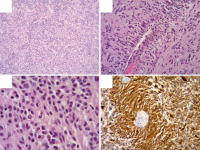
Histopathological and immunohistochemical findings (A: HES *50, B: HES *200, C: HES *400 and D: GFAP *400) Keywords: histopathological finding,
tumour
|
|
|
2986. Cazorla A;
Fohlen M;
Ferrand-Sorbets S;
Polivka M
Case Report
Angiocentric glioma
European Association of NeuroOncology Magazine 2014; 4 (3): 124-126
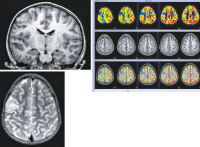
Radiological findings (A and C: MRI T1-weighted images; B: Brain 18FDG-positron emission tomography) Keywords: angiocentric glioma,
EEG,
MRI
|
|
|
2987. Nakai K;
Yamamoto T;
Kumada H;
Matsumura A
Boron Neutron Capture Therapy for Glioblastoma: A Phase-I/II Clinical Trial at JRR-4
BNCT
European Association of NeuroOncology Magazine 2014; 4 (3): 116-123
Scheme of the Linac-based BNCT facility at the University of Tsukuba and
photographs of the installed equipment Keywords: BNCT,
scheme
|
|
|
2988. Nakai K;
Yamamoto T;
Kumada H;
Matsumura A
Boron Neutron Capture Therapy for Glioblastoma: A Phase-I/II Clinical Trial at JRR-4
BNCT
European Association of NeuroOncology Magazine 2014; 4 (3): 116-123
Kaplan-Meyer survival curve of BNCT-treated patients (n = 16) with newly diagnosed
glioblastoma. Median overall survival of grade-IV patients was 22.3 months. Keywords: BNCT,
chart,
glioblastoma
|
|
|
2989. Nakai K;
Yamamoto T;
Kumada H;
Matsumura A
Boron Neutron Capture Therapy for Glioblastoma: A Phase-I/II Clinical Trial at JRR-4
GBM patient
European Association of NeuroOncology Magazine 2014; 4 (3): 116-123
(a) Serial MRI image of the GBM patient treated with protocol IV. The scalp
was unremarkable. Hair loss continued for more than 1 year. (b) Recurrent GBM patient
who underwent BNCT after 60-Gy irradiation. The tumour was stable for more
than 3 years. Keywords: GBM,
glioblastoma,
MRI,
tumour
|
|
|
2990. Nakai K;
Yamamoto T;
Kumada H;
Matsumura A
Boron Neutron Capture Therapy for Glioblastoma: A Phase-I/II Clinical Trial at JRR-4
BNCT
European Association of NeuroOncology Magazine 2014; 4 (3): 116-123
The concept of boron neutron capture therapy (BNCT). Keywords: BNCT,
boron neutron capture therapy
|
|
|
2991. Schnell O
Impact of Molecular Markers on Personalised-Treatment Concepts in Gliomas
Glioblastoma
European Association of NeuroOncology Magazine 2014; 4 (3): 109-115
Possible genetic pathways in glioblastomas.
Glioblastomas can be differentiated into primary
GBM (de novo occurrence) or secondary GBM, which
originate from either a low-grade diffuse astrocytoma
(WHO grade II) directly or via malignant transformation
from an anaplastic astrocytoma WHO grade III.
It has been demonstrated that both GBM pathways
show genetic alterations at different time points and/
or in a different frequency. Some of them are shown
in this figure which was modified from the literature
[46]. Keywords: genetic pathway,
glioblastoma,
scheme
|
|
|
2992. Schnell O
Impact of Molecular Markers on Personalised-Treatment Concepts in Gliomas
MGMT
European Association of NeuroOncology Magazine 2014; 4 (3): 109-115
Effect of MGMT promoter methylation status in glioblastomas. In GBM,
hypermethylation of the MGMT promoter results in reduction of MGMT protein, which
in turn leads to improved chemosensitivity for TMZ chemotherapy or combined radiochemotherapy.
Therefore, MGMT promoter methylation is correlated with improved
overall survival in these patients. In contrast, GBM patients with unmethylated MGMT
promoter status may have reduced response to radio-/chemotherapy and therefore
worse prognosis (mod from [1, 17]). Keywords: glioblastoma,
MGMT,
scheme
|
|
|
2993. Götz I;
Grosu AL;
Spehl TS
Role of PET Imaging in Patients with High-Grade Gliomas undergoing anti-angiogenic Therapy with Bevacizumab – Review of the Literature and Case Report
Distant Tumour
European Association of NeuroOncology Magazine 2014; 4 (3): 102-108
(A) T1-weighted MRI, (B) parametric 18F-FET-PET, and (C) fused images of a
distant tumour manifestation in the mesencephalon. Note that the Gd-enhancing lesion
on the T1-weighted MRI is rather small and only visible on the left side, whereas
the extent of 18F-FET uptake is much larger and extends to the right side. Keywords: MRI,
tumour
|
|
|
2994. Götz I;
Grosu AL;
Spehl TS
Role of PET Imaging in Patients with High-Grade Gliomas undergoing anti-angiogenic Therapy with Bevacizumab – Review of the Literature and Case Report
Glioblastoma
European Association of NeuroOncology Magazine 2014; 4 (3): 102-108
Imaging results of a patient with glioblastoma undergoing bevacizumab
therapy. First column: MRI (MP-RAGE with contrast enhancement); second column:
18F-FET-PET (parametric images scaled to mean uptake in a right temporal reference
region); third column: image fusion. (A) scan prior to therapy 07/2010; (B) scan after
8 weeks of bevacizumab 09/2010; (C) scan after 16 weeks of bevacizumab 11/2010;
(D) scan after re-irradiation with 20 Gy, 01/2011. Bevacizumab therapy was continued.
For details, see text Keywords: Bevacizumab,
glioblastoma,
MRI
|
|
|
2995. Graf A
Fallbericht: Zwillingsgeburt bei einer Hysterektomie-Kandidatin nach präoperativer Ulipristalacetat-5-mg-Therapie
Myom
Journal für Gynäkologische Endokrinologie 2014; 8 (3) (Ausgabe für Österreich): 35-36
Vaginosonographie quer: 33 × 29 mm großes, subseröses Myom im Bereich der Isthmushinterwand. Keywords: Gynäkologie,
Myom,
Ultraschall,
Uterus myomatosus,
Vaginosonographie
|
|
|
2996. Graf A
Fallbericht: Zwillingsgeburt bei einer Hysterektomie-Kandidatin nach präoperativer Ulipristalacetat-5-mg-Therapie
Myom
Journal für Gynäkologische Endokrinologie 2014; 8 (3) (Ausgabe für Österreich): 35-36
Vaginosonographie quer: 27 × 33 mm großes, submuköses Myom im Bereich der Korpusvorderwand. Keywords: Gynäkologie,
Myom,
Ultraschall,
Uterus myomatosus,
Vaginosonographie
|
|
|
2997. Graf A
Fallbericht: Zwillingsgeburt bei einer Hysterektomie-Kandidatin nach präoperativer Ulipristalacetat-5-mg-Therapie
Myom
Journal für Gynäkologische Endokrinologie 2014; 8 (3) (Ausgabe für Österreich): 35-36
Vaginosonographie median-sagittal: Uterus antevertiert-flektiert, 29 × 29 mm großes, subseröses Myom im Bereich der Korpusvorderwand. Keywords: Gynäkologie,
Myom,
Ultraschall,
Uterus myomatosus,
Vaginosonographie
|
|
|
2998. Bannowsky A;
Schulze H;
Ückert S;
Jünemann KP
Die erektile Funktion zwei Jahre nach nervenerhaltender radikaler Prostatektomie – Wie viel bringt die Rehabilitation mit täglichem niedrig dosiertem Sildenafil (25 mg) zur Nacht wirklich?
Potenzrate
Journal für Urologie und Urogynäkologie 2014; 21 (3) (Ausgabe für Österreich): 16-21
Journal für Urologie und Urogynäkologie 2014; 21 (3) (Ausgabe für Schweiz): 14-18
Potenzrate mit vs. ohne niedrig dosiertes Sildenafil (25 mg) 24 Monate nach nsRP. Keywords: Diagramm,
nervenerhaltend,
Potenzrate,
radikale Prostatektomie,
Sildenafil
|
|
|
2999. Bannowsky A;
Schulze H;
Ückert S;
Jünemann KP
Die erektile Funktion zwei Jahre nach nervenerhaltender radikaler Prostatektomie – Wie viel bringt die Rehabilitation mit täglichem niedrig dosiertem Sildenafil (25 mg) zur Nacht wirklich?
Rehabilitation
Journal für Urologie und Urogynäkologie 2014; 21 (3) (Ausgabe für Österreich): 16-21
Journal für Urologie und Urogynäkologie 2014; 21 (3) (Ausgabe für Schweiz): 14-18
Rehabilitation der erektilen Funktion nach nsRP mit täglich 25 mg Sildenafil zur Nacht (n = 41). Keywords: Diagramm,
erektile Funktion,
IIEF-5,
nervenerhaltend,
radikale Prostatektomie,
Rehabilitation,
Sildenafil
|
|
|
3000. D’Andrea D;
Lodde M;
Pycha A
Ureterstenting bei der Harnableitung – Pflicht oder Kür?
Implantationsstenose
Journal für Urologie und Urogynäkologie 2014; 21 (3) (Ausgabe für Österreich): 5-9
Journal für Urologie und Urogynäkologie 2014; 21 (3) (Ausgabe für Schweiz): 4-8
Implantationsstenose des linken Harnleiters in einer Neoblase. Die linke Niere scheidet verspätet aus und das komplette Hohlsystem ist bis zur ureterointestinalen Anastomose dilatiert. Keywords: Anastomose,
Harnleiter,
Implantationsstenose,
Neoblase,
Röntgen
|
|
|
| |

 Suche Medizinische Publikationen
 Suche Abbildungen und Grafiken
 Medizinprodukte - Labortechnik
 Antidotarium (Stand 2012)
 Phytokodex (Stand 2012)
 Fachbücher
 Patientenliteratur